Proudly serving Phoenix, Scottsdale, Mesa, Chandler, Glendale, Gilbert & surrounding areasCall or Text 24/7: 602-449-9183
Aerial view of suburban homes, desert vegetation, and distant mountains in Phoenix, AZ.

Shower Tile Installation and Full Flooring Services in Peoria, AZ

Phoenix Tile Flooring provides shower tile installation, bathroom tile installation, and kitchen backsplash installation for homeowners and businesses across Peoria. Our tile services also include repair and replacement, dustless removal, grout restoration, and specialty installations for natural stone, large-format, outdoor, and commercial surfaces. We plan each project around the tile, substrate, setting material, and finished layout. Call for a free estimate and a straightforward written quote before your remodel begins.

Peoria's hard water can leave mineral deposits on grout and stone, while monsoon dust works into unsealed joints. Seasonal temperature swings also stress outdoor tile when movement joints and setting materials are not suited to the exposure. Waterproofing or layout shortcuts can surface as cracked grout or leaks two years later, long after a fresh installation looked finished. Our licensed and insured tile crews inspect the substrate, plan the layout, and use the specified waterproofing and thin-set for the application.

We work from the Lake Pleasant corridor and Vistancia through Arrowhead Ranch, Sun City, and Old Town Peoria, with service extending into nearby northwest Valley communities named below.

★ ★ ★ ★ ★4.9/5.0 Customer Rating - 26 Years of Tile & Flooring Experience - Thousands of Projects Completed - Licensed, Bonded & Insured - Serving Homeowners & Businesses
Tile Installation Services

Tile Installation Services in Peoria, AZ

Choose a service based on the surface, moisture exposure, tile material, and condition of the existing substrate. We complete residential and commercial work throughout Peoria and also provide tile installation in Surprise, AZ .

Shower Tile Installation
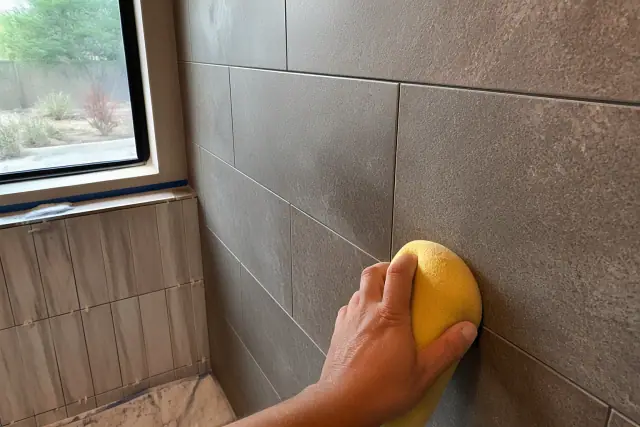
A damp sponge wiping mortar from newly installed stone shower tiles in a bathroom in Peoria, AZ.

We build tiled showers from the water-resistant backing outward, including pan slope, continuous membrane, planned niches or benches, tile layout, grout, and sealing. Waterproofing is tested before tile covers the assembly, with flood testing used on shower pans where applicable.

Explore Service
Bathroom Tile Installation

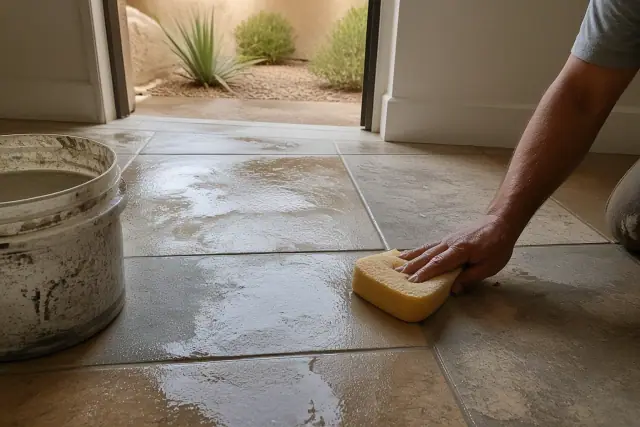
Contractor wiping excess mortar from newly installed stone floor tiles in a home in Peoria, AZ.

Bathroom floor and wall installations start with substrate inspection, moisture testing, and a layout that accounts for slope, plumbing, cabinetry, and transition heights. We select thin-set and grout for porcelain, ceramic, or natural stone and discuss sealants suited to Peoria's mineral-heavy water.

Explore Service

Kitchen Backsplash Installation

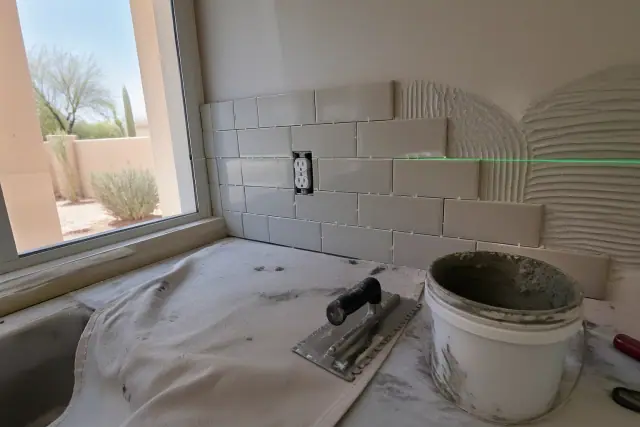
Kitchen tile backsplash installation with a laser level in a Peoria, AZ home.

We install ceramic, porcelain, glass, and mosaic backsplashes behind ranges and sinks or across full wall runs. On-site design consultation lets you compare samples with existing cabinets and counters before we finalize outlet cutouts, corner transitions, accents, and pattern placement.

Explore Service

Tile Repair & Replacement

A damp sponge wiping grout from newly installed stone floor tiles at a job site in Peoria, AZ.

Cracked, loose, or delaminated shower tile may signal damage beyond the finish surface. When a leaking pan or failed backing requires replacement, we remove the assembly to the studs, inspect for water damage, rebuild the waterproofing, and reset the tile; properly installed ceramic and porcelain shower tile can last 40-80 years.

Dustless Tile Removal

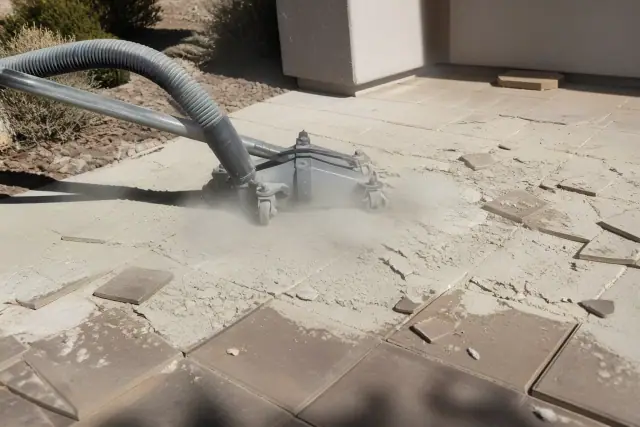
Industrial vacuum hose removing ceramic tile debris during a floor demolition in Peoria, AZ.

Dustless removal connects HEPA-filtered vacuum extraction directly to cutting and demolition tools. It keeps airborne silica dust to a minimum during tear-out, an important control in occupied homes, HVAC-connected rooms, and commercial spaces that remain active during work.

Grout Repair & Regrouting

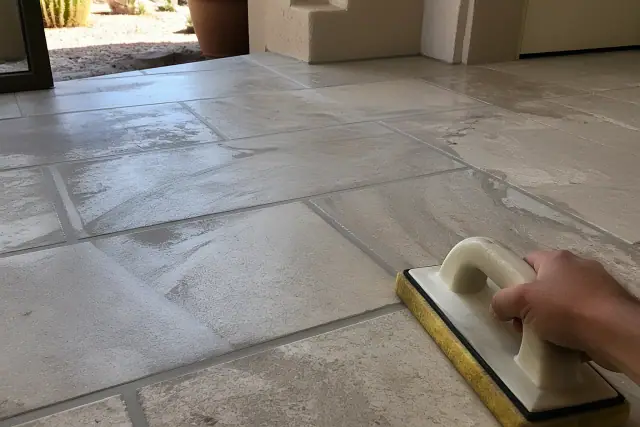
Technician using a sponge to clean fresh grout from stone floor tiles in a home in Peoria, AZ.

Spot repair removes damaged grout to full joint depth before the joint is repacked with matched grout; full regrouting replaces widespread failure while sound tile stays in place. Grout commonly lasts 8-15 years, with unsealed joints in Peoria's hard-water conditions often needing attention sooner.

Natural Stone Tile Installation

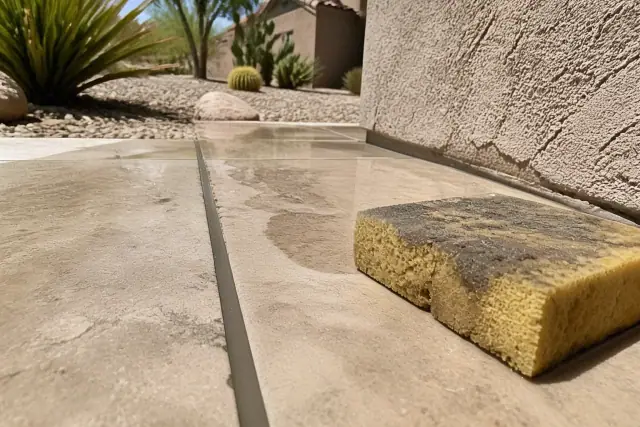
Hand wiping excess mortar from newly installed stone floor tiles in a Peoria, AZ home.

Marble, travertine, and granite require stone-compatible setting materials and sealers rather than a one-product approach. We use modified thin-set, manage uneven stone backs to limit lippage, and outline a resealing schedule with enhancing or penetrating sealer selected for the stone's porosity and hard-water exposure.

Large Format Tile Installation

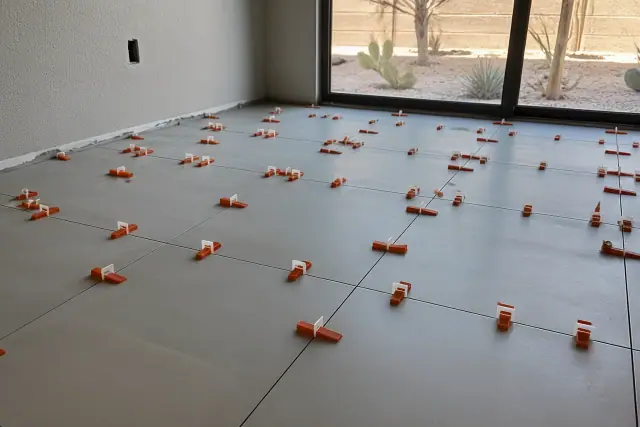
Plastic leveling clips and wedges installed between large floor tiles during a residential project in Peoria, AZ.

Large-format tile-anything over 15 inches per side-needs a flatter substrate, correctly sized trowel notch, and deliberate coverage. We back-butter each piece and use leveling systems to reduce hollow spots and lippage on shower walls and heavy-traffic floors.

Outdoor & Patio Tile Installation

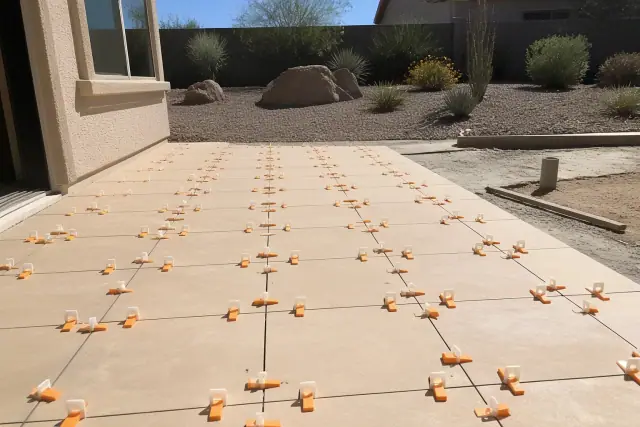
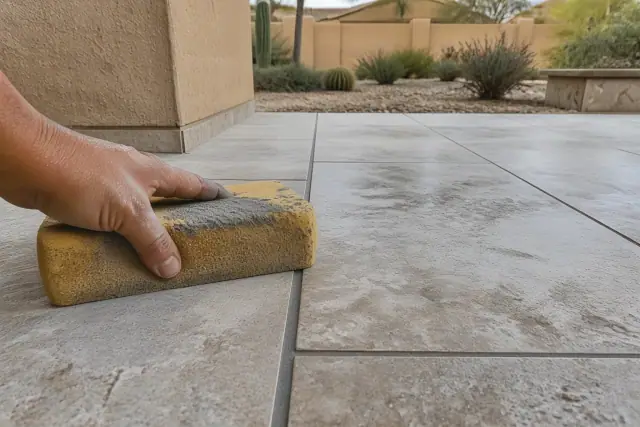
Plastic leveling clips and wedges installed between patio tiles on a job site in Peoria, AZ.

Peoria patios, pool decks, courtyards, and covered extensions need frost-resistant, low-absorption porcelain rated for direct sun and surface temperatures that regularly exceed 140 degrees in summer. Polymer-modified thin-set, flexible grout, and planned expansion joints help accommodate the Valley's thermal movement.

Commercial Tile Installation

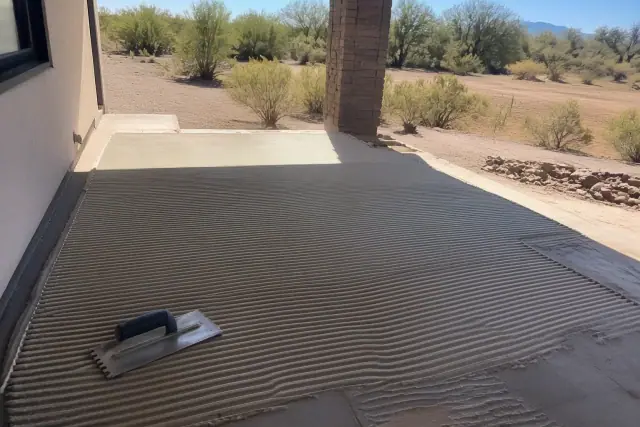
Notched trowel spreading thinset mortar on a concrete floor at a job site in Peoria, AZ.

For restaurants, offices, retail spaces, and multi-family properties, we specify higher PEI-rated tile for foot traffic and slip-resistant finishes for accessible surfaces. Scheduling can be coordinated around business hours to reduce disruption along Peoria's commercial corridors.

Project Planning

How to Choose Tile Installation for Your Peoria Project

A useful tile quote should address what sits behind the finish as clearly as the tile you see. Compare contractors on substrate preparation, waterproofing, mortar coverage, layout planning, permits, and written scope-not on the surface pattern alone.

Project Scope and Material Fit

Start with the room, moisture level, traffic, and desired maintenance. Ceramic, porcelain, glass, mosaic, marble, travertine, and granite do not share identical setting, sealing, or exposure requirements, so material choice should follow the actual surface conditions.

Continuous Waterproofing

Wet-area tile needs a continuous barrier before the first tile is set. Ask whether the proposed assembly uses a liquid-applied membrane, sheet membrane, or foam waterproofing panel, how seams and penetrations are treated, and how the shower pan will be tested.

Substrate Preparation

Cement board, foam backer board, and existing repair surfaces each call for different preparation. Moisture, flatness, damage, and transition heights should be checked before setting materials are chosen or finish layout begins.

Layout and Lippage Control

Measurement and dry layout reveal awkward slivers, off-center focal points, and difficult pattern cuts before mortar locks them in place. Tile size then determines trowel notch, back-buttering, spacer, and leveling-clip needs for consistent joints and a flat finished plane.

Written Scope and Pricing

Compare what each quote includes: tear-out, substrate repair, waterproofing method, setting materials, tile pattern, grout, sealing, and custom features. A written breakdown of materials, labor, and scope makes omissions easier to spot and reduces surprises from changes during the project.

Permit and Code Planning

Cosmetic replacement over an unchanged layout may not require a permit, while plumbing relocation, structural changes, or shower pan replacement typically does. Confirm the scope with the City of Peoria Building Safety Division and plan required coordination before demolition begins.

Peoria Tile Issues

Common Tile Problems in Peoria Properties

Tile failures often begin in the concealed assembly or at a joint, not in the center of a sound tile. Peoria's hard water, monsoon dust, summer heat, and varied slab construction add local stresses that make correct diagnosis important before repair.

Request a Tile Assessment

Water Intrusion Behind Tile

Cracked shower tile, loose sections, pan leaks, or damage in adjacent rooms can point to a failed membrane or backing assembly. Patching the visible surface will not correct water damage behind the wall, so the affected layers need inspection before a repair scope is chosen.

Cracked or Crumbling Grout

Open or deteriorated joints admit moisture and can accelerate mold growth in shower and tub surrounds. A localized failure may suit full-depth grout repair, while widespread deterioration across a floor, backsplash, or shower is better evaluated for complete regrouting.

Hollow Spots and Lippage

Partial mortar coverage can leave hollow areas that are vulnerable to point-load cracking, especially on kitchen floors and large tile. Uneven substrates, inadequate back-buttering, or poor leveling can also leave raised tile edges that interrupt the finished plane.

Hard-Water Staining and Etching

Peoria's mineral-heavy water can leave deposits on grout and cause spotting or etching on vulnerable natural stone. Material-compatible sealer and a documented resealing schedule help protect porous surfaces, but the right maintenance plan depends on the selected stone and exposure.

Outdoor Thermal Movement

Direct sun and seasonal temperature changes make outdoor tile expand and contract. Tile not rated for the exposure, rigid joints, or the wrong mortar can contribute to cracks across pool decks, patios, and courtyards as the assembly moves.

Silica Dust During Tear-Out

Traditional demolition can spread fine silica dust into adjacent rooms and HVAC systems. Tool-connected HEPA vacuum extraction captures dust close to the cutting and breaking point, helping contain the tear-out area in occupied properties.

Why Choose Us

Why Choose Phoenix Tile Flooring in Peoria?

Good tile work is a complete assembly: prepared substrate, suitable setting materials, controlled layout, waterproofing where needed, and finish details that match the room. Our approach combines accountable contracting, Peoria-specific planning, and written scope so customers can compare the work behind the price.

Licensed and Insured Work

We hold the required Arizona Registrar of Contractors licensing for tile and flooring work and carry general liability insurance. That provides a formal standard of accountability for residential and commercial projects instead of leaving customers without recourse if work fails.

Peoria Climate Knowledge

Peoria grew from 154,065 residents in 2010 to 190,985 in the 2020 census, leaving a mix of 1990s slab homes and new-build subdivisions with different substrate conditions. We account for that building variety along with hard water, monsoon dust, and desert temperature swings when planning materials and preparation.

Clear Written Quotes

Each written quote details materials, labor, and scope so waterproofing, preparation, and finish choices are visible before work starts. That documentation also matters to long-term value: published guidance indicates that a midrange bathroom remodel with quality tile work returns close to 59% of project cost at resale.

Installation Process

Our Tile Installation Process in Peoria

The sequence changes with the surface, but preparation and verification come before permanent setting. These six stages show how a shower or bathroom tile project moves from in-home planning through the final grout, seal, and enclosure-ready finish.

01.

Measure and Plan the Design

We measure in the home, review tile samples, and plan niches, benches, drain style, patterns, and transitions. Material quantities include a typical 10-15% waste factor for cuts and pattern matching, and the scope is checked for potential permit needs.

02.

Remove Tile and Inspect the Substrate

Old finishes are removed with dust-control equipment suited to the project. We then inspect the exposed substrate for moisture, flatness, damage, and transition conditions before installing cement board, foam backer, or required repairs.

03.

Build and Test the Waterproofing

Wet areas receive the specified liquid, sheet, or foam-panel waterproofing system with seams and penetrations treated continuously. Shower pans are flood-tested where applicable before tile conceals the membrane.

04.

Dry-Lay and Confirm the Layout

We dry-lay the first several rows, center full tiles at focal points, and shift cuts toward less visible corners. This is the point to correct pattern alignment or narrow edge pieces before anything is set permanently.

05.

Set and Level the Tile

Tile is set with the trowel notch and thin-set matched to its size, material, and substrate. Large pieces are back-buttered, while spacers and leveling clips maintain consistent joints and a flat plane as the mortar cures.

06.

Grout, Seal, and Prepare for Enclosure

After tile cures, joints receive sanded or unsanded grout matched to their width, followed by wet-area sealing where specified. A shower enclosure or glass door is measured and fitted only after the tile, grout, waterproofing, and sealing work is complete and cured.

Project Outcomes

Tile Project Outcomes for Peoria Homes & Businesses

Case Study 1: Wet-area durability: A prepared substrate, continuous waterproofing, correct pan slope, and complete mortar coverage work together beneath the visible shower finish.

Case Study 2: Clean interior updates: Planned kitchen and bathroom layouts accommodate cabinets, outlets, plumbing, transitions, and focal patterns in both new subdivisions and established homes near Old Town Peoria around 83rd Avenue and Peoria Avenue.

Case Study 3: Purpose-matched surfaces: Low-absorption outdoor porcelain, higher PEI-rated commercial tile, and sealed natural stone address different exposure, traffic, and maintenance demands across Peoria properties.

Plan Your Tile Project

Schedule a Peoria
Tile Project
Consultation

Request an in-home consultation for shower, bathroom, backsplash, repair, removal, stone, large-format, patio, or commercial tile work. We will review the surface, discuss materials and design, identify permit or waterproofing needs, and provide a free written estimate for the project scope.

Peoria Tile Help

FAQs About Tile Installation in Peoria, AZ

These answers cover shower costs, waterproofing, permits, materials, maintenance, removal, and service coverage discussed in our Peoria tile project draft. Your written estimate will reflect the dimensions, substrate, tile, pattern, and custom features of your actual scope.

Call Our Tile Team

Published guidance places installation for a standard 6-foot by 8-foot tile shower at $1,200-$1,600, with broader custom shower projects at $1,800-$5,000 depending on tile, waterproofing, niches, benches, and other features. It gives a roughly $1,065-$3,483 range for full bathroom tile that includes the floor and shower, with premium materials or larger square footage potentially higher. We provide a written estimate after measuring the actual project.

Common failures include missing or discontinuous waterproofing, the wrong thin-set for the substrate, insufficient shower-pan slope, poor mortar coverage, and layout that creates uneven joints or narrow tile slivers. Standard drywall or greenboard is not a suitable direct tile backing in a shower. These errors can hide water intrusion until damage reaches the subfloor or adjacent rooms.

Cosmetic tile replacement over an unchanged layout typically does not require a permit, but plumbing relocation, structural changes, or a full shower-pan replacement typically does. We review the project scope and coordinate with the City of Peoria Building Safety Division when a permit applies. Confirming that requirement before demolition helps avoid a mid-project surprise.

Shower walls need a water-resistant assembly such as cement board or foam waterproofing panels with a continuous liquid-applied, sheet, or panel-based membrane system. The exact combination depends on the tile and design, but seams and penetrations must remain part of the waterproof barrier. Tile is set only after that backing and waterproofing are complete.

Yes. Tile, grout, waterproofing, and specified sealers should be finished and cured before a glass door or enclosure is fitted to the completed wall surface. Installing the enclosure later also avoids obstructing layout and reduces the chance of damage during tile work.

A shower floor needs a properly sloped mortar bed or pre-sloped pan foundation, a continuous waterproofing membrane, modified thin-set, and the finish tile. The draft specifies a typical slope of one-quarter inch per foot toward the drain so water does not pool. The pan waterproofing is tested where applicable before tile is installed.

The sequence is tear-out, substrate inspection and repair, backer installation, waterproofing and testing, dry layout, tile setting, curing, grouting, and sealing. Tile size and material determine the trowel notch, thin-set, back-buttering, spacing, and leveling approach. Enclosure fitting follows the cured tile finish.

Ceramic and porcelain can provide a practical, budget-friendly bathroom finish, while marble, travertine, and granite offer a natural-stone look with different sealing needs. Glass and mosaic tile are often used for backsplashes or accents. We match mortar, grout, and sealer to the material, substrate, moisture exposure, and Peoria's hard-water conditions.

Large pieces demand a flatter surface and closer attention to mortar coverage than smaller tile. The installer selects the trowel notch for the tile and substrate, back-butters the pieces, and uses leveling controls to limit hollow spots and raised edges. Layout planning also matters because large cuts are harder to hide at walls and focal points.

Industry guidance recommends frost-resistant, low-water-absorption porcelain rated for direct sun exposure. Outdoor assemblies also need polymer-modified thin-set, flexible grout, and planned expansion joints to handle desert heat and seasonal movement. Slip resistance should match the intended patio, courtyard, or pool-deck use.

Marble, travertine, and granite need a stone-compatible enhancing or penetrating sealer selected for their porosity. The installation plan should also specify modified thin-set and a resealing schedule. Timely maintenance helps the surface resist mineral spotting and etching, but the interval depends on the stone and exposure.

Regrouting can be more cost-effective when the tile and underlying assembly remain sound but joints have failed across a shower, floor, or backsplash. Replacement is more appropriate when tile is cracked or delaminated, the pan leaks, or water has damaged the backing or subfloor. Inspection distinguishes a finish-joint problem from a deeper assembly failure.

HEPA-filtered vacuum extraction connects directly to cutting and demolition tools to capture fine material near its source. This keeps airborne silica dust to a minimum and limits spread into HVAC systems and nearby rooms. It is particularly useful in occupied homes and businesses that continue operating around the work zone.

Our draft names Vistancia, Trilogy at Vistancia, Arrowhead Ranch, Fletcher Heights, Westwing, Pleasant Valley, the Lake Pleasant corridor, Old Town Peoria, and areas near the Peoria Sports Complex. It also lists Glendale, Sun City, Sun City West, portions of northwest Phoenix, and parts of Maricopa and Yavapai counties within the described coverage. Ask us directly about a property outside those named areas.

Yes. The draft supports commercial tile installation for restaurants, offices, retail spaces, and multi-family properties, with scheduling coordinated around business hours to limit disruption. Tile can be selected for higher foot traffic and slip-resistant accessible surfaces. Dust-controlled removal is also available when an occupied space needs existing tile removed.