Proudly serving Phoenix, Scottsdale, Mesa, Chandler, Glendale, Gilbert & surrounding areasCall or Text 24/7: 602-449-9183
Aerial view of suburban homes, desert vegetation, and distant mountains in Phoenix, AZ.

Shower Tile Installation and Grout Restoration Services in Gilbert, AZ

Phoenix Tile Flooring provides shower tile installation, bathroom tile installation, kitchen backsplash installation, and tile repair and replacement throughout Gilbert, Arizona. Our family-owned, licensed and bonded tile contractor also handles dustless tile removal, grout repair and regrouting, natural stone, large-format tile, outdoor and patio tile, and commercial tile installations. We plan each project around wet-area waterproofing, substrate condition, material selection, and the desert conditions that can stress tile assemblies.

Gilbert's hard water can leave mineral deposits that etch grout lines, while the shift from a 115-degree July afternoon to an air-conditioned interior repeatedly stresses thinset bonds. Low humidity can also make thinset and grout cure too quickly when conditions are not controlled. Careful preparation, compatible setting materials, and correctly placed movement joints help the finished surface perform in this climate.

With 287,285 residents, Gilbert includes 1990s tract homes needing shower rebuilds as well as newer construction near the San Tan Mountains. We work from the Heritage District to Val Vista Lakes, Morrison Ranch, Power Ranch, Agritopia, and Seville. Call to discuss the tile assembly, finish, and scope your project actually needs.

★ ★ ★ ★ ★4.9/5.0 Customer Rating - 26 Years of Tile & Flooring Experience - Thousands of Projects Completed - Licensed, Bonded & Insured - Serving Homeowners & Businesses
Installation Services

Tile Installation Services in Gilbert, AZ

Choose a service based on the room, exposure, substrate, and condition of the existing tile rather than appearance alone. Gilbert projects range from waterproof shower assemblies and detailed backsplashes to repair, removal, natural stone, large-format floors, patios, and commercial tile. Across the wider East Valley, the source also identifies Mesa, Tempe, AZ , Chandler, Scottsdale, and Queen Creek as regular work areas.

Shower Tile Installation

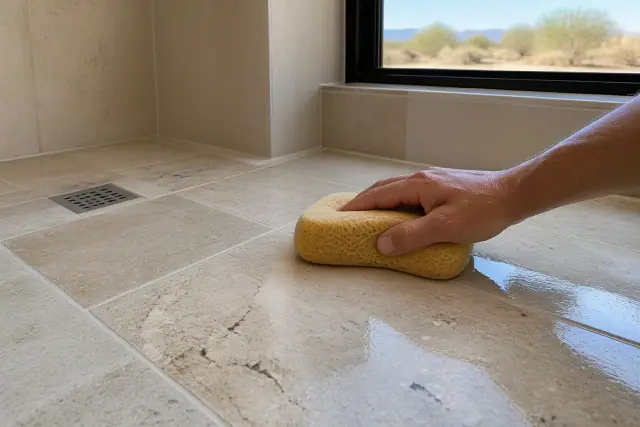
A damp sponge wiping excess mortar from between newly installed stone shower tiles in a Gilbert, AZ home.

A shower is a waterproofing system before it is a finish surface. We install a bonded waterproof membrane, a correctly sloped pan, and wet-area backer board using TCNA handbook methods and ANSI A108 setting standards; Gilbert-area shower tile installation typically runs $1,500 to $5,000 depending on area, tile size, niche, bench, and curbless-entry scope.

Explore Service

Bathroom Tile Installation

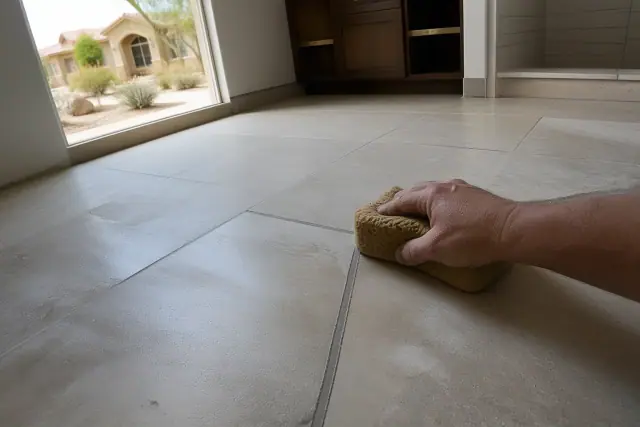
A contractor wiping grout from new stone bathroom floor tiles during a home renovation in Gilbert, AZ.

We coordinate floor tile, shower walls, tub surrounds, and tub decks into one plan using porcelain, ceramic, or natural stone. A Gilbert bathroom tile remodel generally falls between $1,065 and $3,483 for materials and labor, while bathroom floor tile commonly ranges from $800 to $1,500, with tile grade and layout complexity affecting the scope.

Explore Service

Kitchen Backsplash Installation

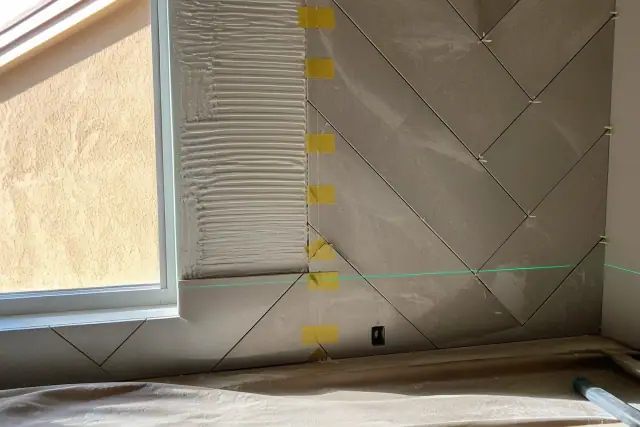
Laser level beam projected across a tile backsplash under construction in a kitchen in Gilbert, AZ.

Subway, mosaic, and glass tile backsplashes require accurate layout around outlets, cabinetry, and range hoods. Ceramic tile installation labor for this work generally runs near $54 per hour depending on pattern complexity, so the chosen layout matters alongside the tile itself.

Explore Service

Tile Repair & Replacement

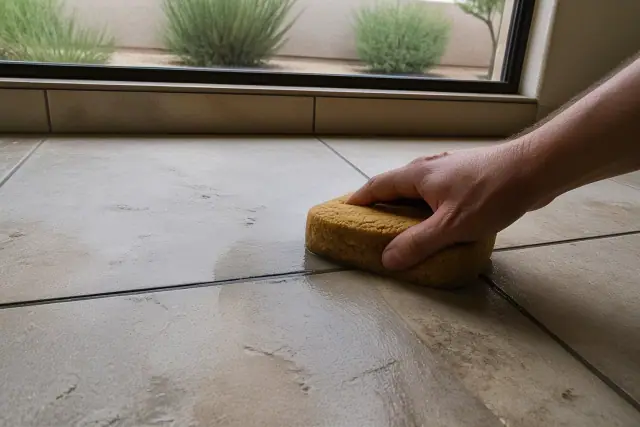
A sponge wiping excess mortar from between newly installed stone floor tiles at a residential job site in Gilbert, AZ.

Cracked, chipped, or loose tile often signals moisture intrusion, subfloor movement, or another substrate issue beneath the finish. We determine whether the damage is isolated, match replacement tile as closely as possible, and align new pattern lines and grout joints with the surrounding field.

Dustless Tile Removal

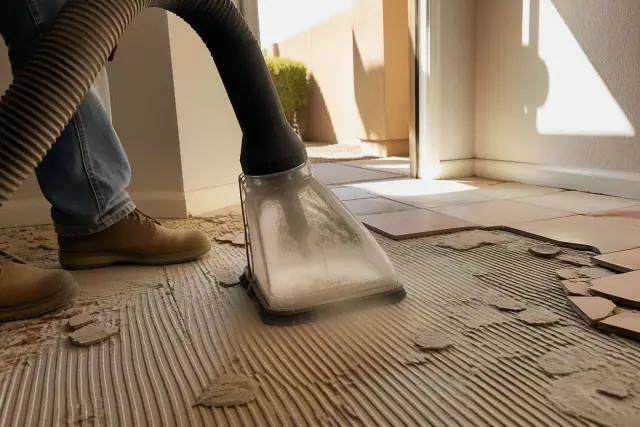
Industrial vacuum hose removing ceramic floor tile debris during a residential remodel in Gilbert, AZ.

Vacuum-attached removal equipment contains silica dust and debris at the source instead of sending it through an occupied home or commercial space. This approach speeds cleanup and helps protect the HVAC system from contamination during tear-out.

Grout Repair & Regrouting

Damp sponge cleaning fresh grout between stone floor tiles at a job site in Gilbert, AZ.

Grout has a working lifespan of roughly 8 to 15 years even when properly sealed, and Gilbert's dry climate can accelerate cracking and crumbling. We remove failed material, check for water intrusion, repack joints with sanded or unsanded grout as spacing requires, then seal the repaired or recolored surface against mineral deposits.

Natural Stone Tile Installation

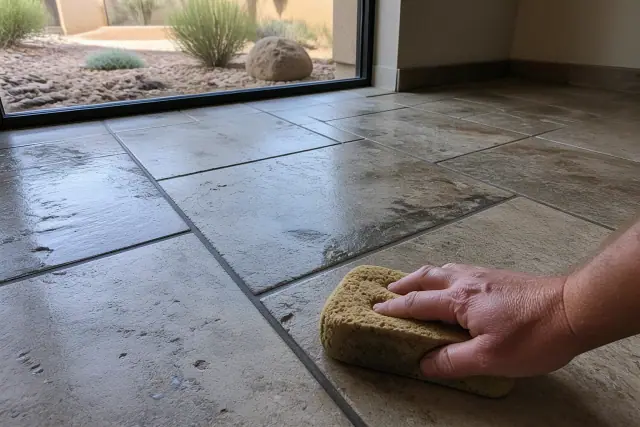
A damp sponge wiping grout from newly installed natural stone floor tiles in a residential home in Gilbert, AZ.

Travertine, marble, slate, and limestone each require appropriate setting materials, back-buttering, and penetrating sealers. Because natural stone is less forgiving of substrate irregularities than ceramic, we grade the material and evaluate the surface before installing it in showers, entries, or outdoor living areas.

Large Format Tile Installation

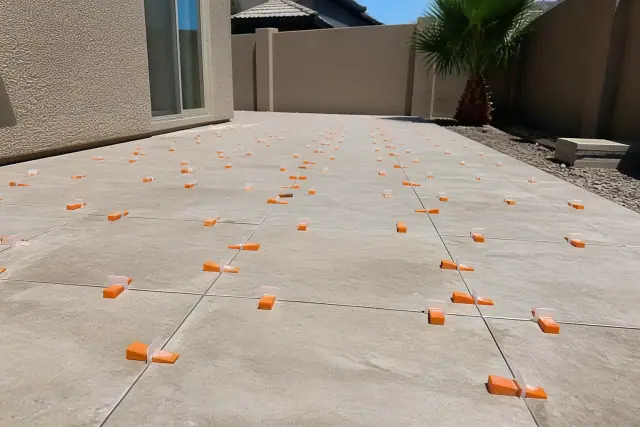
Plastic leveling clips and wedges between large format floor tiles during installation in Gilbert, AZ.

Tile 15 inches and larger per side demands a flatter substrate, larger-notch trowels, and back-buttering to limit lippage and hollow spots. We check floor flatness and use ANSI A118.15-rated large-format bonding mortar before creating the clean, minimal-grout-line look common in newer Gilbert homes.

Outdoor & Patio Tile Installation

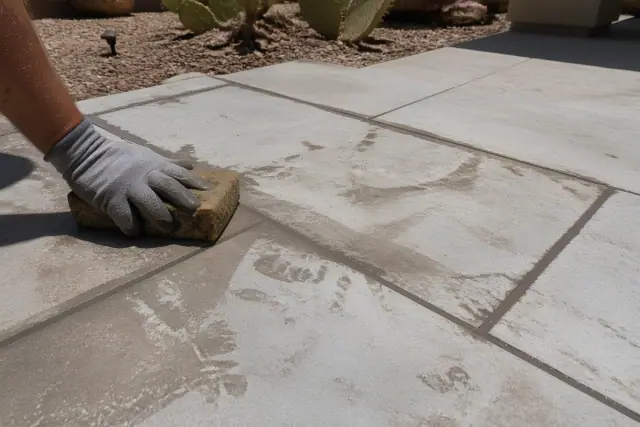
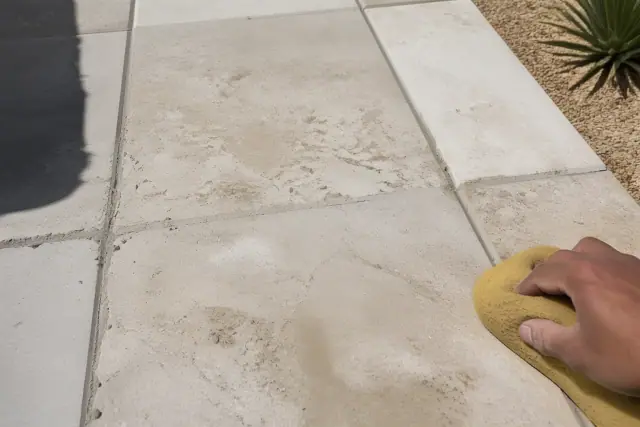
Damp sponge wiping excess grout from newly installed stone patio tiles at a residence in Gilbert, AZ.

Gilbert summer highs regularly exceed 110 degrees, exposing patio, pool-deck, and entry tile to UV, thermal cycling, and monsoon runoff. We use frost-resistant, low-absorption porcelain or suitable natural stone with drainage slope and expansion joints sized for those temperature swings.

Commercial Tile Installation

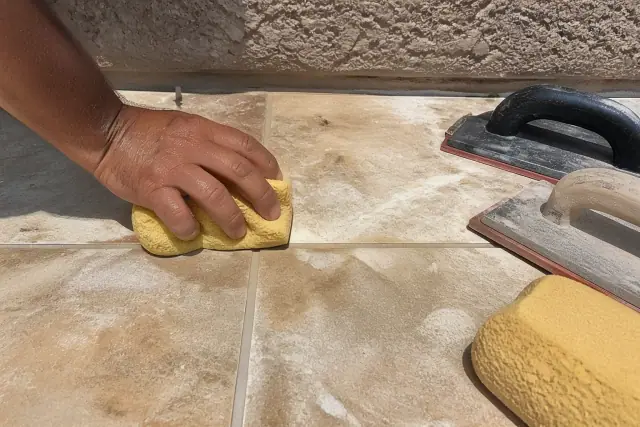
Technician wiping mortar from grout lines between newly installed stone tiles in Gilbert, AZ.

Commercial tile installation requires a surface, setting material, and layout suited to the space's daily use. When existing tile must come out in an occupied setting, vacuum-attached removal helps contain airborne dust and reduces contamination during tear-out.

Service Selection

How to Choose Tile Work for Your Gilbert Property

The right tile scope begins below the visible surface. Wet-area waterproofing, substrate flatness, material behavior, exterior movement, removal conditions, and permit-sensitive changes all influence whether a project calls for repair, regrouting, replacement, or a full installation.

Wet-Area Waterproofing

For showers and tub surrounds, choose an assembly built around a bonded membrane, wet-area backer board, a correctly sloped pan, and careful drain transitions. Tile and grout are the finish; the waterproofing system behind them manages moisture.

Flat, Sound Substrates

A flat, stable base supports proper thinset coverage and helps prevent cracks, lippage, and hollow spots. Large-format and natural-stone projects are especially sensitive to subfloor or wall irregularities, so surface condition should be checked before tile is cut.

Material Compatibility

Porcelain, ceramic, glass, travertine, marble, slate, and limestone do not all use the same mortar, sealer, or handling method. The tile type, joint spacing, exposure to hard water, and room conditions should guide the setting material and grout selection.

Expansion and Drainage

Exterior tile needs low absorption, proper slope for monsoon runoff, and movement joints that accommodate daily temperature swings. These choices matter on patios, pool decks, and entries exposed to Gilbert sun and UV.

Dust-Contained Removal

When tile removal is part of the project, consider how silica dust and debris will be controlled. Vacuum-attached equipment contains material at the tool, which is particularly useful around kitchens, HVAC systems, occupied homes, and commercial interiors.

Clear Scope and Permit Review

A useful quote should distinguish a like-for-like finish replacement from work that moves plumbing, changes a shower-pan drain, affects waterproofing, or alters structure. Those broader changes may require review through the Town of Gilbert Building Safety Division, while simple tile replacement usually does not trigger a permit.

Gilbert Tile Issues

Common Tile Problems in Gilbert Properties

Visible tile damage often begins with a less obvious condition below or around the surface. Cracks, moisture, heat movement, mineral deposits, uneven setting, and failing grout each point to a different repair or replacement decision.

Request Tile Assessment

Cracked or Loose Tile

A cracked, chipped, or loose tile may be cosmetic, but it can also indicate undercoverage, subfloor movement, or a weak substrate. Inspecting the base before replacing the finish helps avoid repeating the same failure.

Hidden Moisture Intrusion

Hot shower steam can condense and soak into unsealed backer board or drywall even in Arizona's dry air. Moisture hidden behind the tile can lead to mold or structural rot before surface damage makes the problem obvious.

Heat and Thermal Movement

The transition between outdoor heat and air-conditioned interiors makes tile assemblies expand and contract. Outside, intense heat and low humidity can also accelerate curing, reducing bond strength when the product and working conditions are not managed correctly.

Hard-Water Mineral Staining

Gilbert's hard water can deposit minerals on shower tile and etch or discolor grout lines. A tile finish suited to the exposure, properly selected grout, and penetrating sealer where appropriate can make ongoing care more manageable.

Lippage and Hollow Spots

Large-format tile can develop uneven edges or hollow areas when the substrate is not flat or mortar coverage is incomplete. Checking flatness, using the right trowel, and back-buttering the tile address the conditions that commonly cause these defects.

Cracked or Crumbling Grout

Failed grout can admit water, release from the joint, or make an otherwise sound installation look worn. Removing loose material, correcting water intrusion, and using sanded or unsanded grout for the joint spacing produces a more complete repair than covering the surface.

Why Choose Us

Why Choose Phoenix Tile Flooring in Gilbert, AZ?

Phoenix Tile Flooring is a family-owned, licensed and bonded tile contractor focused on the parts of an installation that determine how it performs. We pair established tile-setting methods with local attention to hard water, heat, drainage, substrate movement, and moisture.

Licensed and Bonded

Our stated licensed and bonded status matters when a bathroom project expands beyond finish tile into waterproofing, drainage, plumbing relocation, or structural work. We identify when the planned scope should be reviewed against current Arizona code and Town of Gilbert requirements.

TCNA and ANSI Methods

We build wet-area assemblies around TCNA handbook methods and ANSI A108 setting standards, and use ANSI A118.15-rated mortar for large-format work. Those references inform preparation, mortar selection, coverage, and installation details rather than treating tile as a decorative layer alone.

Repair Before Replacement

We assess whether damaged tile is isolated or points to moisture intrusion or substrate movement before recommending a fix. Structurally sound tile may only need regrouting or a localized replacement, while broader failure can justify a full re-tile.

Simple Process

Our Tile Installation Process in Gilbert

A clear process connects the visible design to waterproofing, substrate preparation, layout, setting materials, and long-term care. We begin with the actual condition of the space, then build the scope around the tile and exposure involved.

01.

Discuss the Project

Tell us whether the project involves a shower, bathroom, backsplash, floor, stone surface, patio, repair, removal, or commercial space. We use that conversation to identify the room, finish goals, exposure, and concerns that need closer evaluation.

02.

Inspect the Substrate

We check the wall or floor base, existing tile, flatness, movement, and signs of moisture intrusion. For repairs and replacement, this step helps distinguish an isolated finish problem from a condition underneath.

03.

Confirm Materials and Layout

Tile type, size, grade, pattern, joint spacing, and exposure guide the mortar, grout, sealer, and layout. We account for outlets, cabinetry, niches, benches, curbless entries, pattern lines, and other project-specific details before setting begins.

04.

Prepare and Waterproof

Preparation may include dust-contained removal, substrate correction, wet-area backer board, a bonded membrane, or a correctly sloped shower pan. Exterior work also receives the drainage slope and expansion planning its exposure requires.

05.

Set Tile and Finish Joints

We use the selected mortar, trowel, coverage method, and back-buttering where the tile requires it. Joints are finished with sanded or unsanded grout according to spacing, then sealed when the material and exposure call for it.

06.

Review the Finished Surface

The completed surface is reviewed for aligned pattern lines, grout-joint consistency, drainage, and the intended finish. We also explain the care considerations tied to natural stone, sealed grout, hard-water exposure, or an exterior installation.

Project Outcomes

Tile Solutions for Gilbert Homes & Businesses

Case Study 1: Waterproof Shower Assembly: A bonded membrane, wet-area backer board, and correctly sloped pan protect the structure behind the selected shower tile.

Case Study 2: Targeted Tile Renewal: Regrouting, close-match replacement tile, or a sectional re-tile can restore a sound surface after the underlying condition is addressed.

Case Study 3: Cleaner Tear-Out: Vacuum-attached removal captures silica dust at the source, shortens cleanup, and helps keep debris out of HVAC equipment in occupied spaces.

Plan Your Project

Plan Your Gilbert
Tile
Project

Tell Phoenix Tile Flooring what you are seeing, what surface you want to change, and how the space is used. We will discuss the tile, substrate, preparation, layout, and exposure involved, then provide a free quote for the defined scope.

Gilbert Tile Help

FAQs About Tile Installation in Gilbert, AZ

These answers cover project cost ranges, waterproofing, repair decisions, material selection, removal, permits, and desert-specific installation concerns described in the Gilbert tile draft.

Call Our Tile Team

Professional shower tile installation in the Gilbert area typically runs $1,500 to $5,000. Square footage, tile size, and additions such as a niche, bench, or curbless entry affect the final scope.

A full Gilbert bathroom tile remodel generally falls between $1,065 and $3,483 for materials and labor, while bathroom floor tile commonly ranges from $800 to $1,500. Tile grade, layout complexity, and the surfaces included account for much of the variation.

Published data lists roughly $17.22 to $21.37 per square foot as a typical labor range and notes ceramic backsplash work near $54 per hour depending on pattern complexity. The room, surface preparation, tile type, layout, and required details determine which pricing basis fits the project.

Mineral deposits can collect on tile and etch or stain grout lines, especially in showers. Selecting a suitable finish and grout, then using a penetrating sealer where the material calls for it, can make mineral exposure easier to manage.

An isolated tile can often be replaced when the surrounding assembly is sound and a close material match is available. The substrate should be checked first because moisture intrusion, movement, or poor thinset coverage may be the real cause.

Properly sealed grout has a working lifespan of roughly 8 to 15 years. Gilbert's dry conditions and hard-water deposits can contribute to cracking, crumbling, or staining, so the joint condition and any water intrusion should be evaluated together.

Regrouting can restore a structurally sound shower or floor when the tile remains secure and the primary issue is worn grout. Loose tile, widespread cracking, moisture damage, or substrate movement may require targeted replacement or a full re-tile instead.

The draft identifies tile 15 inches and larger per side as large format. It needs a flatter substrate, larger-notch trowels, back-buttering, and an appropriate mortar such as the stated ANSI A118.15-rated large-format bonding material.

Dustless tile removal uses vacuum-attached equipment to capture silica dust and debris at the source. It is especially useful in occupied homes, kitchens, and commercial spaces because it reduces airborne material, speeds cleanup, and helps protect HVAC equipment.

Simple like-for-like tile replacement usually does not trigger a permit. Moving plumbing, changing a shower-pan drain, altering structure, or working on the waterproofing system may require review through the Town of Gilbert Building Safety Division under current Arizona code.

The draft calls for frost-resistant, low-absorption porcelain or suitable natural stone for exterior areas. Proper slope, expansion joints, and installation materials must also account for UV exposure, thermal cycling, and monsoon runoff.

The draft supports porcelain, ceramic, glass, travertine, marble, slate, and limestone across showers, bathrooms, backsplashes, floors, entries, and outdoor spaces. Natural stone needs different setting materials, back-buttering, and penetrating sealers than ceramic tile.

A properly built shower uses wet-area-rated backer board, a bonded waterproof membrane, and a correctly sloped shower pan before tile is installed. Published guidance indicates that this work follows TCNA handbook methods and ANSI A108 setting standards.

The draft names the Heritage District, Val Vista Lakes, Morrison Ranch, Power Ranch, Agritopia, and Seville within Gilbert. It also identifies Mesa, Tempe, Chandler, Scottsdale, and Queen Creek across the East Valley and greater Maricopa County.

Hot shower steam can condense against cooler surfaces even when the surrounding climate is dry. Without suitable ventilation, wet-area backer board, and waterproofing, moisture can enter drywall or the wall assembly and contribute to mold or structural rot.