Proudly serving Phoenix, Scottsdale, Mesa, Chandler, Glendale, Gilbert & surrounding areasCall or Text 24/7: 602-449-9183
Aerial view of suburban homes, desert vegetation, and distant mountains in Phoenix, AZ.

Shower Tile Installation and Kitchen Backsplash Services in Mesa, AZ

Phoenix Tile Flooring provides shower tile installation for homeowners and commercial properties in Mesa, AZ. Our work also includes bathroom tile installation, kitchen backsplash installation, tile repair and replacement, dustless tile removal, and grout repair and regrouting. We install natural stone, large format, outdoor and patio, and commercial tile as well. Each project is planned around the tile material, substrate condition, wet-area details, and property needs.

Mesa's hard water and mineral-heavy municipal supply can accelerate mineral buildup and wear along shower grout lines. Bone-dry summer conditions followed by monsoon humidity spikes also put waterproofing membranes and movement joints under stress. Central Mesa's older housing stock can require a full shower teardown, while newer Eastmark homes may be ready for large format porcelain or custom details. Our installations follow TCNA handbook methods and applicable ANSI A108/A118 standards, backed by Arizona Registrar of Contractors licensing and general liability insurance.

Mesa is Maricopa County's third-most populous city, with a population of 504,258. We work from Dobson Ranch and the historic core near Main Street and Mesa Drive to Eastmark, Red Mountain, Las Sendas, and Signal Butte.

★ ★ ★ ★ ★4.9/5.0 Customer Rating - 26 Years of Tile & Flooring Experience - Thousands of Projects Completed - Licensed, Bonded & Insured - Serving Homeowners & Businesses
Tile Installation Services

Professional Tile Services in Mesa, AZ

From full shower renovations to focused backsplash and grout projects, each service starts with the installation conditions that will affect the finished tile. We plan this work for Mesa homes and commercial properties, while our broader East Valley schedule also includes Chandler, AZ , Tempe, Gilbert, Queen Creek, and Apache Junction. The ten service categories below match the tile work available through Phoenix Tile Flooring.

Shower Tile Installation

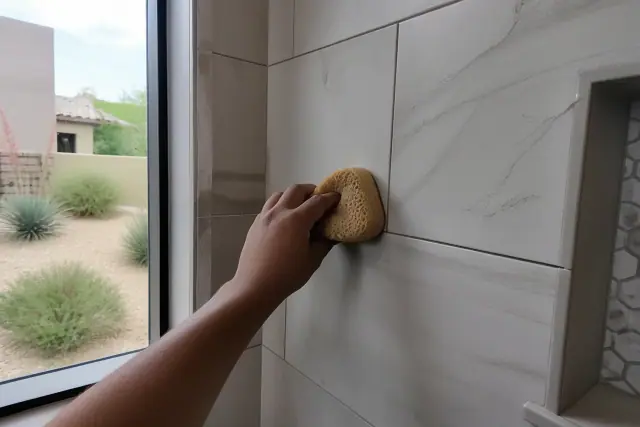
A damp sponge wiping mortar from new stone shower tiles in a residential home in Mesa, AZ.

We build shower systems from the substrate up with cement board or foam backer, an ANSI A118.10-rated bonded or sheet waterproofing membrane, and ceramic, porcelain, or wet-area-rated stone set with polymer-modified thinset. Pan slope, niche placement, and substrate condition are measured before the project is quoted. Explore Service »

Explore Service

Bathroom Tile Installation

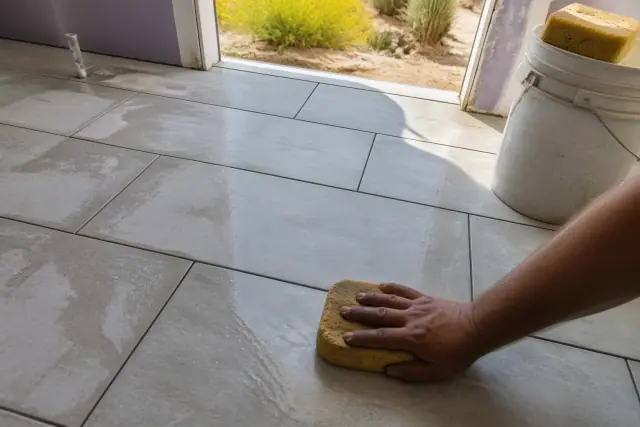
Technician wiping grout from new stone tile flooring in a home in Mesa, AZ.

Bathroom tile work can include floors, walls, tub surrounds, and the shower itself. We coordinate flange heights and drain relocations with plumbers so finished tile sits flush and the wet area slopes correctly to the drain. Explore Service »

Explore Service

Kitchen Backsplash Installation

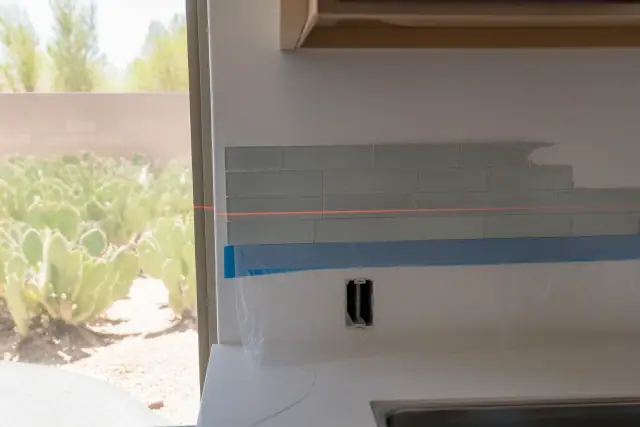
Red laser level line aligned on a partially installed glass subway tile kitchen backsplash in a home in Mesa, AZ.

Kitchen backsplash options range from simple subway tile to detailed mosaics behind ranges and sinks. We template around outlets and cabinetry so cuts land clean, and a standard kitchen backsplash is typically finished in a single day. Explore Service »

Explore Service

Tile Repair & Replacement

A sponge wiping excess mortar from newly installed stone tile flooring in Mesa, AZ.

Cracked or loose shower tile is removed so the substrate, bond, and membrane beneath it can be checked before the area is reset. When discontinued tile or widespread damage makes patching impractical, replacement is laid out to align grout lines and blend the new field with surrounding tile.

Dustless Tile Removal

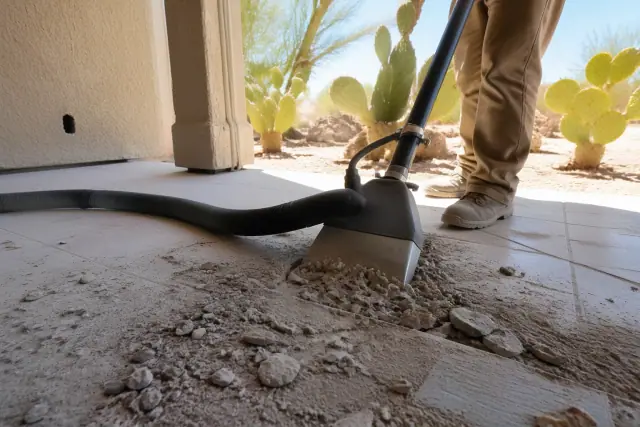
Industrial vacuum hose removing tile flooring debris at a jobsite in Mesa, AZ.

Dustless removal connects HEPA-filtered vacuum extraction directly to demolition tools to keep airborne silica dust out of the room and the rest of the home. This contained approach is the default for occupied homes, especially when children, pets, or respiratory concerns are part of the project.

Grout Repair & Regrouting

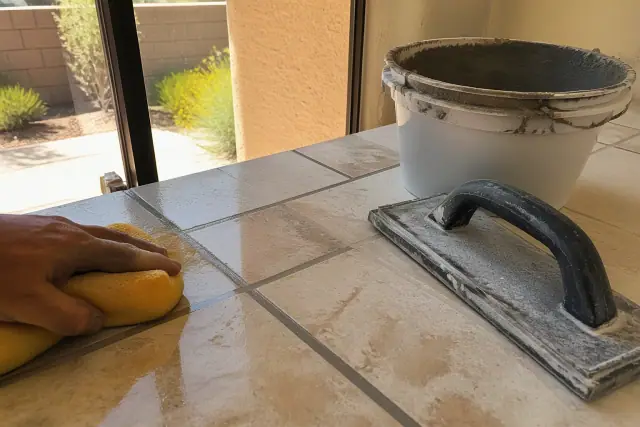
A technician wipes mortar from between new stone tiles during a grout repair project in Mesa, AZ.

Grout typically lasts 8 to 15 years before it needs attention, with Mesa's hard water contributing to mineral staining and micro-cracking. We can rake out and color-match failing lines or regrout an entire shower or floor; maintained ceramic and porcelain tile can last 40 to 80 years or more.

Natural Stone Tile Installation

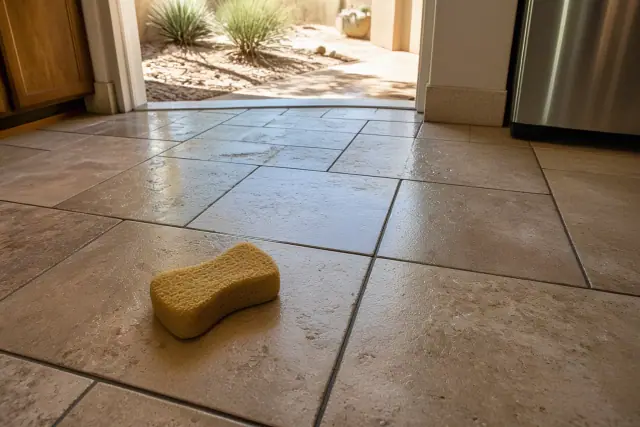
Damp sponge wiping grout from newly installed natural stone tile flooring in a Mesa, AZ kitchen.

Marble, granite, travertine, slate, and limestone are porous, so wet-area material selection and sealing are essential. We source stone rated for the intended wet area and seal it before and after grouting prior to handoff.

Large Format Tile Installation

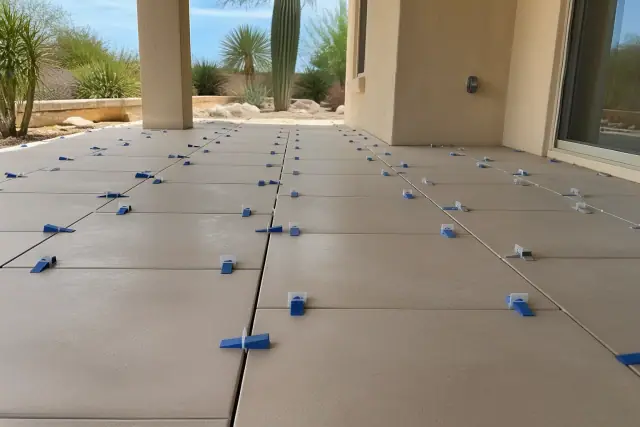
Large format tiles being installed with leveling clips and spacers at a residential job site in Mesa, AZ.

Large format tile is anything over 15 inches on a side. Installation uses back-buttering, a larger-notch trowel, and leveling clips to pursue the mortar coverage called for by ANSI A108.02 while controlling lippage across showers and open floor plans.

Outdoor & Patio Tile Installation

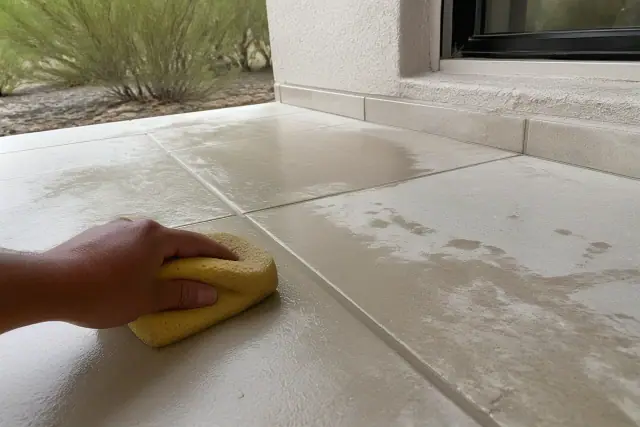
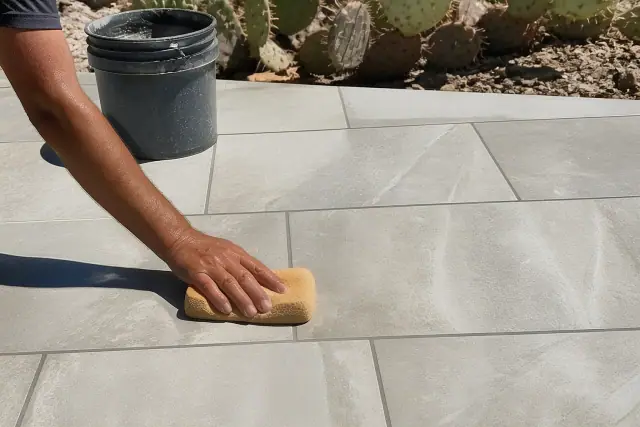
A damp sponge wiping grout from stone patio tiles at a residential job site in Mesa, AZ.

Mesa patios need frost-resistant, low-absorption porcelain rated for exterior use, drainage slope for monsoon downpours, and movement joints with flexible sealants for thermal expansion. Pool and deck tile selections must also tolerate constant sun and chlorine exposure.

Commercial Tile Installation

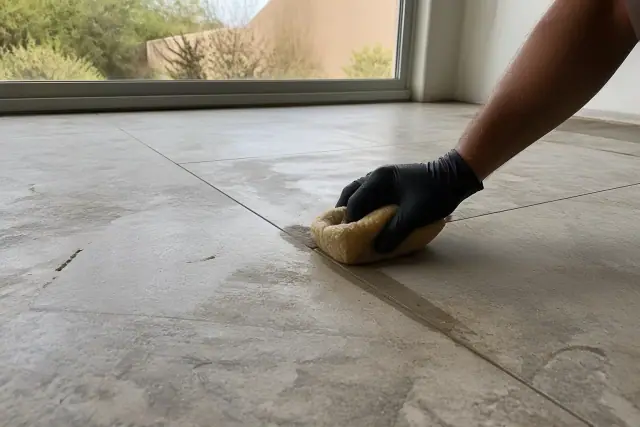
A gloved hand uses a damp sponge to grout stone floor tiles at a construction site in Mesa, AZ.

Commercial projects include restaurant kitchens, retail entryways, and multi-unit work in East Valley office and retail developments. We account for ADA slope requirements, slip-resistant tile with the required minimum dynamic coefficient of friction, and scheduling around business hours to limit downtime.

Tile Selection

How to Choose Tile Installation Options in Mesa

The right tile option depends on whether the area is wet or dry, indoors or exposed to Mesa weather, and how much grout maintenance the owner wants. Material porosity, tile size, waterproofing, drainage, and substrate condition all affect the installation method. These six factors help narrow a project before layout and material choices are finalized.

Waterproof Shower Assembly

Shower tile is only the finish layer, so the assembly starts with cement board or foam backer and a bonded or sheet membrane rated per ANSI A118.10. The membrane must cover the walls, curb, and pan and be tested before tile conceals it.

Ceramic or Porcelain Tile

Ceramic generally carries a lower material cost, but it still needs the same waterproofing and slope standards in a shower. Porcelain's density and low water absorption can better resist staining and mineral buildup in Mesa's hard-water conditions, while larger porcelain panels reduce the number of grout lines.

Natural Stone Wet-Area Tile

Natural stone introduces porosity and sealing requirements that ceramic and porcelain do not share. Marble, granite, travertine, slate, or limestone should be rated for the wet-area application and sealed before and after grouting.

Large Format Tile Layout

Bigger panels create fewer joints, but they place more emphasis on substrate flatness, mortar coverage, and lippage control. A dry layout plans cuts, niche placement, and accent bands before polymer-modified thinset and leveling clips are used.

Outdoor Drainage and Movement

Exterior tile needs low absorption, sun and chlorine resistance where applicable, and a slope that moves monsoon water away. Movement joints and flexible sealants address the large surface-temperature swing between summer afternoons and winter nights.

Project Scope and Material Budget

Professional shower tile installation generally ranges from $1,800 to $5,000 per project, while large format porcelain, natural stone, or custom mosaic accent work often runs $10 to $50 per square foot installed. Phoenix Tile Flooring measures each shower and separates material and labor scope so owners can see what drives the project total.

Mesa Tile Issues

Common Tile Problems for Mesa Properties

Cracked grout, loose tile, mineral scale, and failed waterproofing can look like surface problems even when the cause is beneath the finished material. Mesa's water, heat, humidity swings, and exterior soil conditions make it important to inspect the assembly before choosing repair or replacement. The six issues below describe what can affect showers, floors, patios, and pool areas.

Request Tile Evaluation

Hard-Water Mineral Buildup

Mesa's mineral-heavy municipal supply accelerates scaling on grout and glass tile and can contribute to stained or micro-cracked joints. Epoxy grout is often recommended over standard cementitious grout in local showers because it better addresses this maintenance concern.

Cracked or Loose Tile

A cracked or loose shower tile often points to substrate movement or a failed bond rather than a defective tile. Removing the affected area creates an opportunity to check the membrane before resetting tile and closing the surface.

Failed Shower Waterproofing

A rushed or skipped membrane can allow water to reach the wall assembly behind finished tile. Weak membrane seams may become apparent within the first year or two as Mesa's seasonal humidity changes expose the failure, and access can require removing the tile wall.

Heat and Humidity Stress

Summer slab temperatures routinely exceed 150 degrees Fahrenheit, which can flash-cure thinset and weaken bond strength when installation conditions are not managed. Monsoon humidity spikes create a different stress on waterproofing seams and cured materials.

Outdoor Thermal Expansion

Patio and pool surfaces experience dramatic temperature swings between summer afternoons and winter nights. Without correctly placed movement joints and flexible sealants, that expansion and contraction can stress tile, grout, and the bond beneath them.

Exterior Substrate Movement

Homes near Red Mountain and the Superstition foothills can sit on more mineral-rich soil. Testing before a large exterior tile project helps identify substrate conditions that could contribute to later shifting.

Why Choose Us

Why Mesa Property Owners Choose Phoenix Tile Flooring

Tile quality depends on what happens behind and beneath the finished surface. Phoenix Tile Flooring combines Arizona Registrar of Contractors licensing and general liability insurance with TCNA and ANSI installation methods. We also measure the actual pan, niche, substrate, and layout before quoting instead of treating every Mesa shower as the same project.

Arizona Licensing and Insurance

We carry Arizona Registrar of Contractors licensing and general liability insurance. Those protections give property owners a clear professional framework for installation work on the job site.

TCNA and ANSI Methods

Our tile services follow Tile Council of North America handbook methods and applicable ANSI A108/A118 installation and material standards. That guidance informs waterproofing, mortar coverage, backer fastening, tile setting, grouting, and movement-joint details.

Measured, Itemized Scope

Each shower is quoted after measuring pan slope, niche placement, and substrate condition. Material and labor are scoped separately so the effects of tile choice and custom details are visible before work starts.

Shower Installation Process

Our Shower Tile Installation Process in Mesa

Our shower installations follow a fixed sequence from demolition through final inspection. Substrate preparation and waterproofing come before layout and setting because tile cannot correct an improperly prepared assembly. The six steps below combine the full process without skipping cure, slope, sealing, or movement-joint details.

01.

Demo and Inspect

Remove the existing finish and inspect the shower pan, wall assembly, and plumbing rough-in. This exposes bond failures, movement, or membrane concerns that need to be addressed before rebuilding.

02.

Prepare the Substrate

Install cement board or foam backer board at the manufacturer's fastening spacing. Confirm flange heights, drain location, surface flatness, and framing for niches or benches before waterproofing begins.

03.

Waterproof and Test

Apply the waterproofing membrane across the shower walls, curb, and pan, including framed niches and benches. Allow it to cure and test the membrane before any finished tile covers the assembly.

04.

Slope and Lay Out

Form the pan mortar bed with a minimum quarter-inch-per-foot slope to the drain. Dry-lay the tile to plan cuts, niche alignment, and accent bands before mortar is mixed.

05.

Set the Tile

Set tile with polymer-modified thinset and check alignment as the work progresses. Back-butter large format pieces and use the trowel and leveling approach required for full mortar coverage and lippage control.

06.

Grout, Seal, and Inspect

Grout the finished field, seal natural stone or other porous tile, and caulk every movement joint. The final inspection checks the finished surface, joints, drainage, and project details before handoff.

Mesa Project Applications

Tile Planning for Mesa Homes & Businesses

Case Study 1: Established Central Mesa Homes: Housing from the 1970s can have mortar-bed showers that need a full teardown so the pan, walls, and plumbing rough-in can be inspected before a new tile assembly is built.

Case Study 2: Eastmark and Signal Butte Primary Suites: Newer homes often suit large format porcelain, matte finishes, a glass accent band, or a framed shower niche or bench integrated during waterproofing.

Case Study 3: East Valley Commercial Interiors: Restaurant kitchens, retail entryways, offices, and multi-unit projects call for slip resistance, applicable ADA slopes, and scheduling that accounts for business operations.

Start With a Walkthrough

Plan Your Mesa
Tile
Project

Request a walkthrough for a shower, bathroom, backsplash, repair, removal, outdoor, or commercial tile project in Mesa. Phoenix Tile Flooring measures the project conditions before preparing the scope, and properties within a reasonable drive of central Mesa can typically be scheduled for a walkthrough within the same week.

Mesa Tile Help

FAQs About Tile Installation in Mesa, AZ

These answers cover the shower costs, materials, installation standards, maintenance needs, and Mesa conditions described above. A project-specific quote still depends on measurements, tile choice, substrate condition, waterproofing, and custom details.

Call Our Tile Team

Professional shower tile installation generally costs between $1,800 and $5,000 per project. Tile alone for a standard 6-foot by 8-foot shower averages $1,200 to $1,600 depending on the material selected.

Bathroom ceramic tile installation runs roughly $17 to $21 per square foot, including materials and labor. The final scope still depends on the substrate, layout, and selected tile.

Large format porcelain, natural stone, or custom mosaic accent work often costs $10 to $50 per square foot installed. Material selection, sealing needs, layout, and custom cuts influence where a project lands within that range.

Local quotes for a curbless or walk-in conversion that replaces a prefab tub-shower unit commonly land between $5,000 and $6,000. Size, tile choice, and whether the design includes a linear drain affect the total.

Phoenix Tile Flooring follows Tile Council of North America handbook methods and applicable ANSI A108/A118 installation and material standards. Shower membranes are selected for ANSI A118.10 requirements, while large format coverage methods follow ANSI A108.02.

Ceramic is generally the lower-material-cost option, while porcelain's density and low water absorption can better resist staining and mineral buildup from hard water. Both still require a correctly sloped and waterproofed shower assembly.

Large format tile is anything over 15 inches on a side. It needs back-buttering, a larger-notch trowel, and careful leveling to achieve mortar coverage and control lippage.

Grout typically lasts 8 to 15 years before it needs attention, and Mesa's hard water can shorten that window through staining and micro-cracking. Properly maintained ceramic and porcelain tile can last 40 to 80 years or more.

Mesa's hard water can leave mineral scale on grout and glass tile. Epoxy grout is recommended over standard cementitious grout for many local showers because it better addresses mineral staining and ongoing maintenance.

Phoenix Tile Flooring typically finishes a standard kitchen backsplash in a single day. Detailed mosaics, outlet locations, cabinetry, and the amount of cutting can affect the project scope.

Exterior work calls for frost-resistant, low-absorption porcelain rated for outdoor use, plus slope for monsoon drainage. Movement joints and flexible sealants address thermal expansion, while pool and deck materials also need ratings for sun and chlorine exposure.

HEPA-filtered vacuum extraction attaches directly to the demolition tools, reducing airborne silica dust and keeping it off the rest of the home. The work area is contained as part of the removal process.

Yes. Marble, granite, travertine, slate, and limestone are porous, so Phoenix Tile Flooring uses stone rated for the wet-area application and seals it before and after grouting.

Service covers Mesa neighborhoods including Dobson Ranch, Eastmark, Red Mountain, Las Sendas, and Signal Butte, along with the historic core near Main Street and Mesa Drive. The wider East Valley service area includes Tempe, Chandler, Gilbert, Queen Creek, Apache Junction, and neighboring parts of Maricopa County, including areas bordering the Salt River Pima-Maricopa Indian Community.

The quote follows measurements of pan slope, niche placement, and substrate condition rather than a generic average. Material and labor are scoped separately so the effects of tile selection and custom details are visible.