Sound Joints Can Be Overlaid
An overlay is reasonable when the existing grout resists a firm scrape, contains no mold or soft spots, and leaves enough joint depth for a functional new layer.
Phoenix Tile Flooring can sometimes apply new grout over existing grout in a Phoenix shower, but only when the old material is firmly bonded, mold-free, clean, and deep enough to hold a new layer. For showers from Arcadia to Ahwatukee, the condition of the joints, tile, and substrate determines whether an overlay, partial removal, full grout replacement, or retile makes sense.
An overlay is reasonable when the existing grout resists a firm scrape, contains no mold or soft spots, and leaves enough joint depth for a functional new layer.
Soft, crumbling, moldy, or missing grout cannot support an overlay. Moisture behind the tile, hollow sounds, loose tile, or floor-drainage trouble calls for a deeper evaluation before new grout is installed.
Clean hard-water mineral deposits from the joints, rake out failed material, and score or scarify the remaining surface so the new grout has a mechanical key instead of sitting on a smooth skim coat.
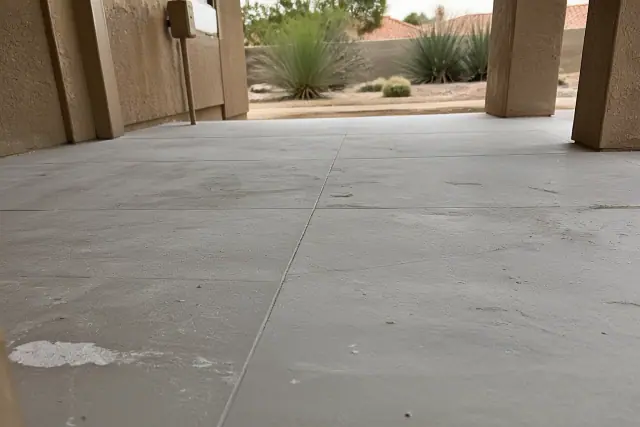
Intact grout lines with no soft spots, missing chunks, mold staining, or loose tile. This is the starting condition an overlay needs.
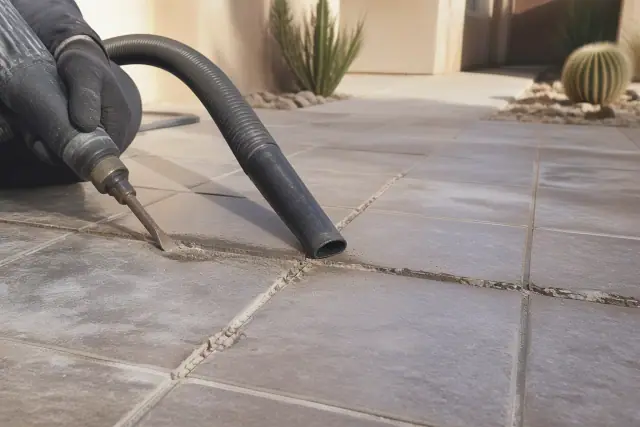
Dark staining, broken joints, and soft grout around an enclosed shower corner. Covering these symptoms can trap moisture against the wall assembly.
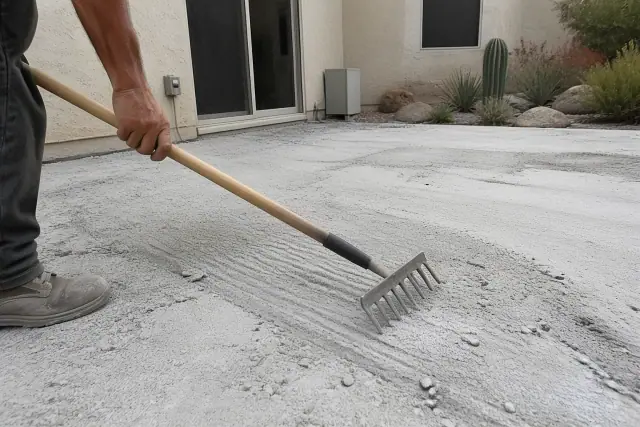
A carbide-tipped hand rake angled away from tile edges. Industry practice calls for removing roughly two-thirds of the joint depth, or a minimum of 1/8 inch, before applying new grout.
Use a firm scrape with a margin trowel to check whether the grout stays solid. A weak, powdery, or crumbling joint needs removal rather than another layer.
Look for mold staining, musty odors, soft spots, and moisture behind shower walls or bathtub surrounds. Loose, cracked, or hollow-sounding tile can indicate a substrate problem that grout alone will not solve.
When less than roughly 20-30% of a joint shows damage, removing only the loose and cracked sections may be sufficient. Broad failure, mold, or moisture calls for full grout removal.
New grout placed over dirty, sealed, or crumbling joints can debond, crack, or flake within months. Without proper preparation, an overlay may fail within a year or two instead of lasting for years.
| Joint Condition | Overlay Decision | Required Preparation |
|---|---|---|
| Firm, clean, mold-free grout with usable depth | Yes, an overlay may work | Remove mineral deposits, score the surface, and create a mechanical key |
| Localized loose or cracked sections | Use partial removal | Rake out failed areas and scarify the sound grout that remains |
| Soft, crumbling, mold-stained, or damp joints | No, remove the failed grout | Find and address the moisture issue before installing new grout |
| Loose or hollow tile, substrate concerns, or poor drainage | Do not rely on grout alone | Evaluate the tile assembly before choosing grout replacement or retile |
A grout overlay, or skim regrout, keeps sound material in place while adding new grout to cleaned and mechanically roughened joints. It is worth considering when the tile is sound and the failure is limited to staining, fine hairline cracks, or a desired color change. Compared with a full retile, it is less disruptive and can address two common shower complaints: staining and water intrusion. It is not a substitute for repairing loose tile, hidden moisture, a deteriorating substrate, or a shower floor with slope and drainage problems.
Grout and tile types affect the decision. Sanded cement grout generally accepts an overlay better than unsanded grout or old epoxy, while porcelain and ceramic joints behave differently from moisture-sensitive natural stone. Epoxy and urethane grout resist Phoenix hard water and mineral scale better than standard cement grout. Tight corners and glass surrounds add labor, and glass or stone tile requires careful blade control because a slipped grout saw or oscillating multi-tool can chip an edge.
Can hardened grout be softened before removal? Warm water with a grout-softening solution applied for 10 to 15 minutes can loosen older cement grout and mineral buildup. Can grout be removed without power tools? For spot repairs under a few square feet, a manual carbide-tipped hand rake is slower but gives better control around glass and natural stone. Is regrouting worth it? It can be when the tile is sound and the problem is limited to the joints, but deteriorated grout, moisture, loose tile, or drainage trouble needs a broader repair.
Share what you see in the joints, whether any tile feels loose or hollow, and whether the shower has mold, moisture, or drainage concerns. A Phoenix tile crew can compare the condition of the grout, tile, and substrate before recommending an overlay, partial removal, full replacement, or retile.